
Sustainability
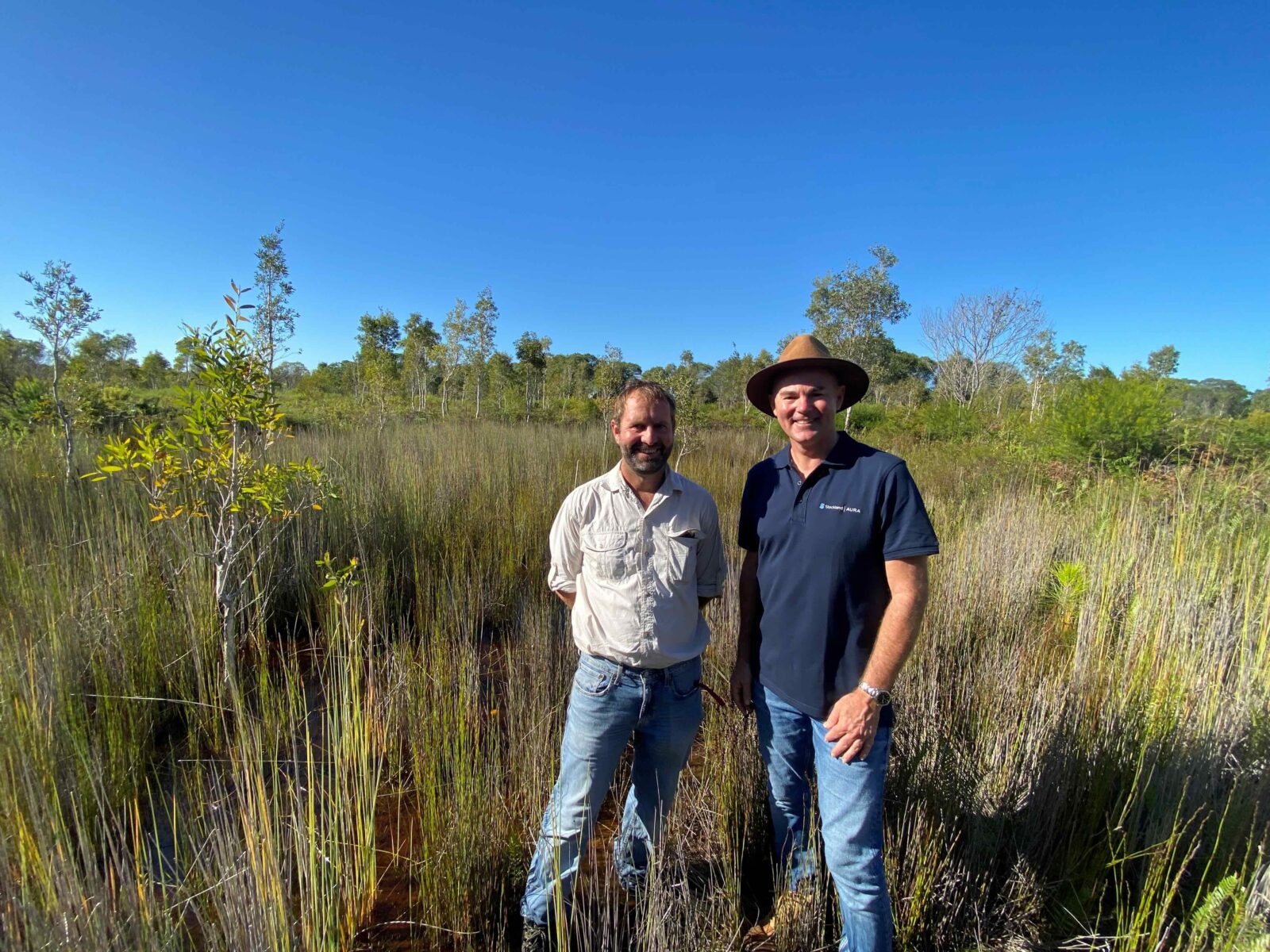
Stockland Aura has partnered with the University of the Sunshine Coast (UniSC) on a new research project to better understand how to protect and restore habitat for the vulnerable Wallum Sedge Frog.
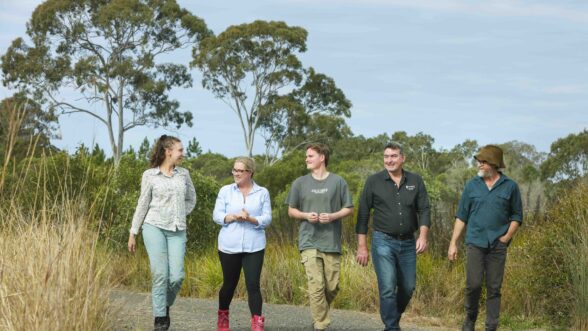
The two-year study involves a team of UniSC researchers including Dr Gabriel Conroy, Dr Beth Brunton, Dr Gareth Chalmers, and Dr Ross Dwyer, alongside leading frog habitat restoration expert Dr Mark Bayley and Stockland Senior Development Manager Mark Stephens.
Across Stockland Aura, around 700 hectares of former pine plantation land are being rehabilitated for conservation, with more than 150 hectares specifically dedicated to protecting Acid Frog species. Over 150 custom-designed frog ponds have already been built, many now supporting important species including the Wallum Sedge Frog.
Mark Stephens said the research builds on previous conservation efforts that have successfully supported the breeding of species like the Wallum Sedge Frog.
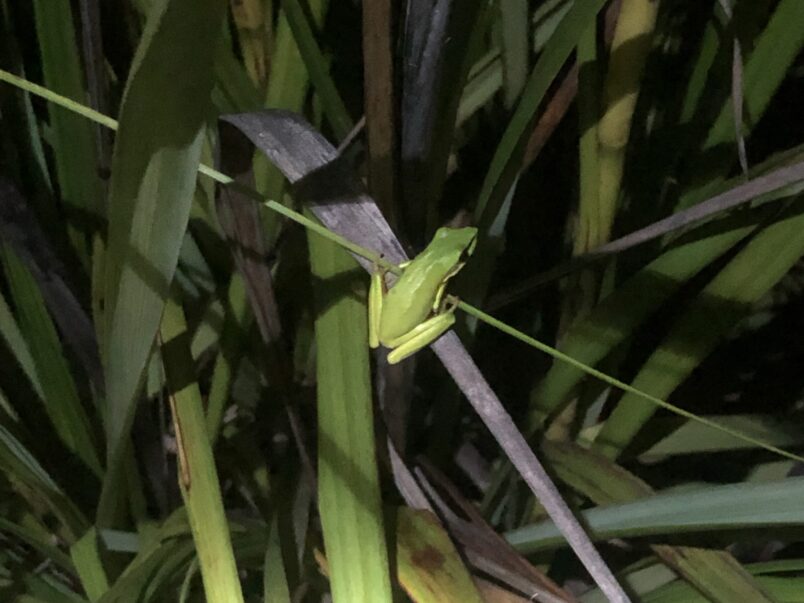
“We have already seen great results from the work completed and this research will build on our understanding of the habitat characteristics of the threatened frog species and the factors influencing its survival,” he said.
“Frogs are often considered indicators of ecosystem health. Understanding their needs can give us vital clues about broader environmental issues affecting our landscapes. Through this research, we are helping to protect frogs while also contributing to a greater understanding of environmental impacts and how we can help mitigate those effects.”
Dr Gabriel Conroy said the project will conduct a thorough ecological study, incorporating climate models.
“This study will enable us to examine the potential impacts of rising temperatures, sea level rise, and saltwater inundation on the future of the Wallum Sedge Frog and identify the best ways to protect their safe havens,” he said.
“We will also focus on key unknowns for the species, including detailed analysis of water cycles, groundwater systems, landform processes, and how these elements combine to form the very specific habitat niche required by this species.”
Dr Mark Bayley, who has collaborated with Stockland since 2012, said the research will provide valuable insights into the long-term conservation of the Wallum Sedge Frog.
“The Wallum Sedge Frog has very unique habitat requirements, favouring wetlands that often dry during winter and fill only during certain periods in summer and autumn. It’s been encouraging to see our habitat restoration efforts succeed within the Aura community, with many artificial wetlands now providing suitable homes for the species,” he said.
“The partnership with UniSC will generate crucial data to help protect and restore habitat for these endangered frogs, along with other native species affected by climate change.”
More information on Stockland Aura’s sustainability initiatives can be found here.
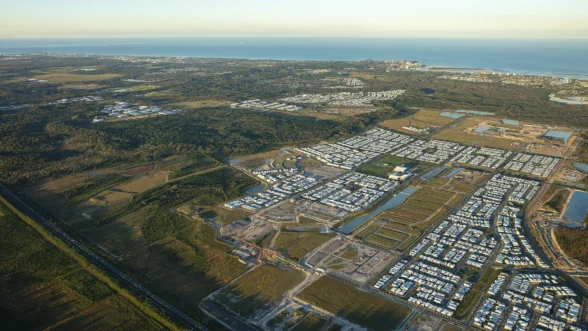
Aura has been meticulously designed to harmonise with its unique natural surroundings, offering glimpses of the majestic Glasshouse Mountains and providing easy access to the vibrant beaches of Caloundra and the serene Pumicestone Passage.
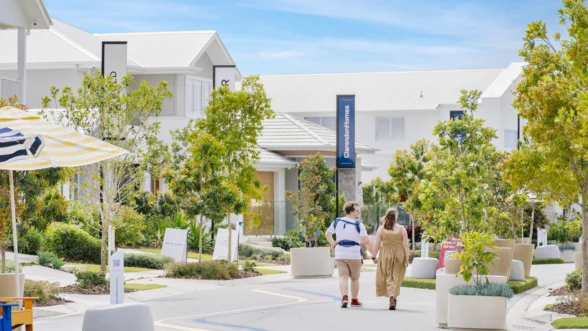
At Aura, sustainability isn’t just a box to check—it’s a fundamental value that guides every decision we make.
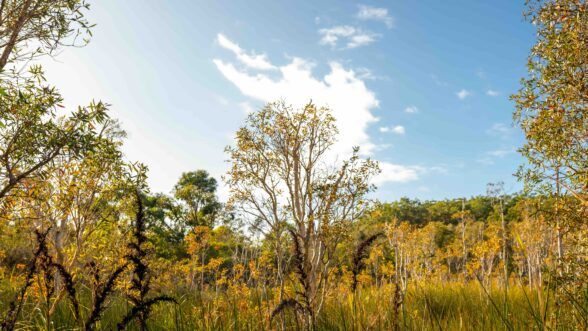
At Stockland, sustainability is more than a commitment—it’s a core part of how communities like Aura are planned and developed.
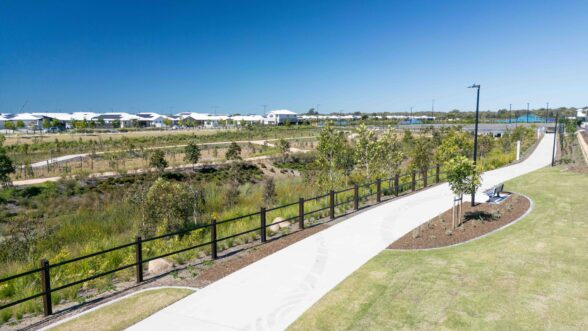
Aura Brook is more than a picturesque water feature – it plays a vital role in maintaining the environmental health of the Sunshine Coast community.
Aura’s youngest residents are getting their hands dirty to shape the future of their neighbourhood.